On faith, devotion, and what people turn to amid crisis, war, violence, and uncertainty.
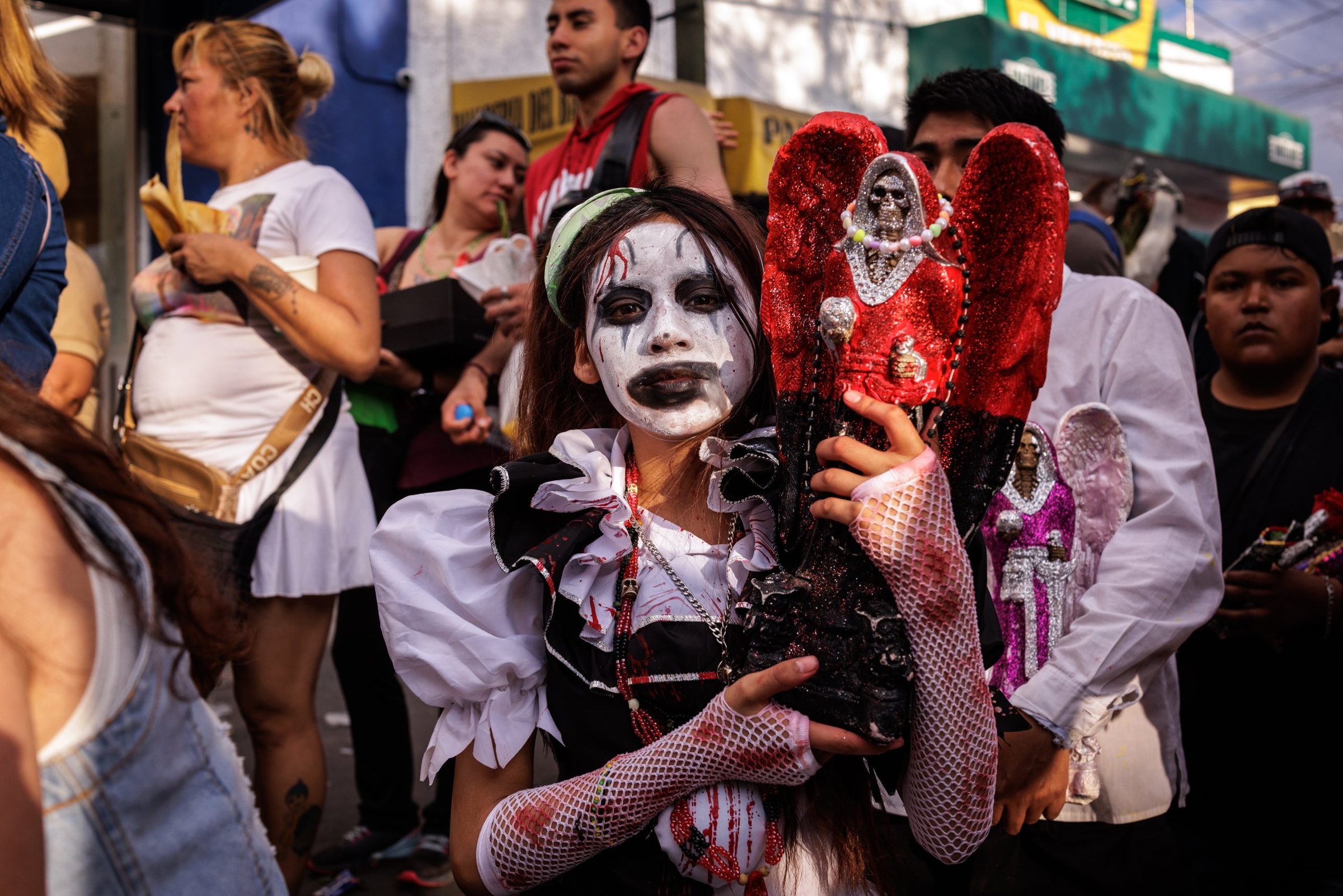
Devotees pray to Santa Muerte, the saint of death, in Tepito, known as El Barrio Bravo. The faithful crawl on their knees down Alfarería Street to the altar Enriqueta "Doña Queta" Romero set up in 2001, which marks its 25th anniversary this year. Her husband, Raymundo Romero, was shot and killed in front of the same altar in 2016. The main celebration falls on November 1, All Saints' Day, during Mexico's Day of the Dead.
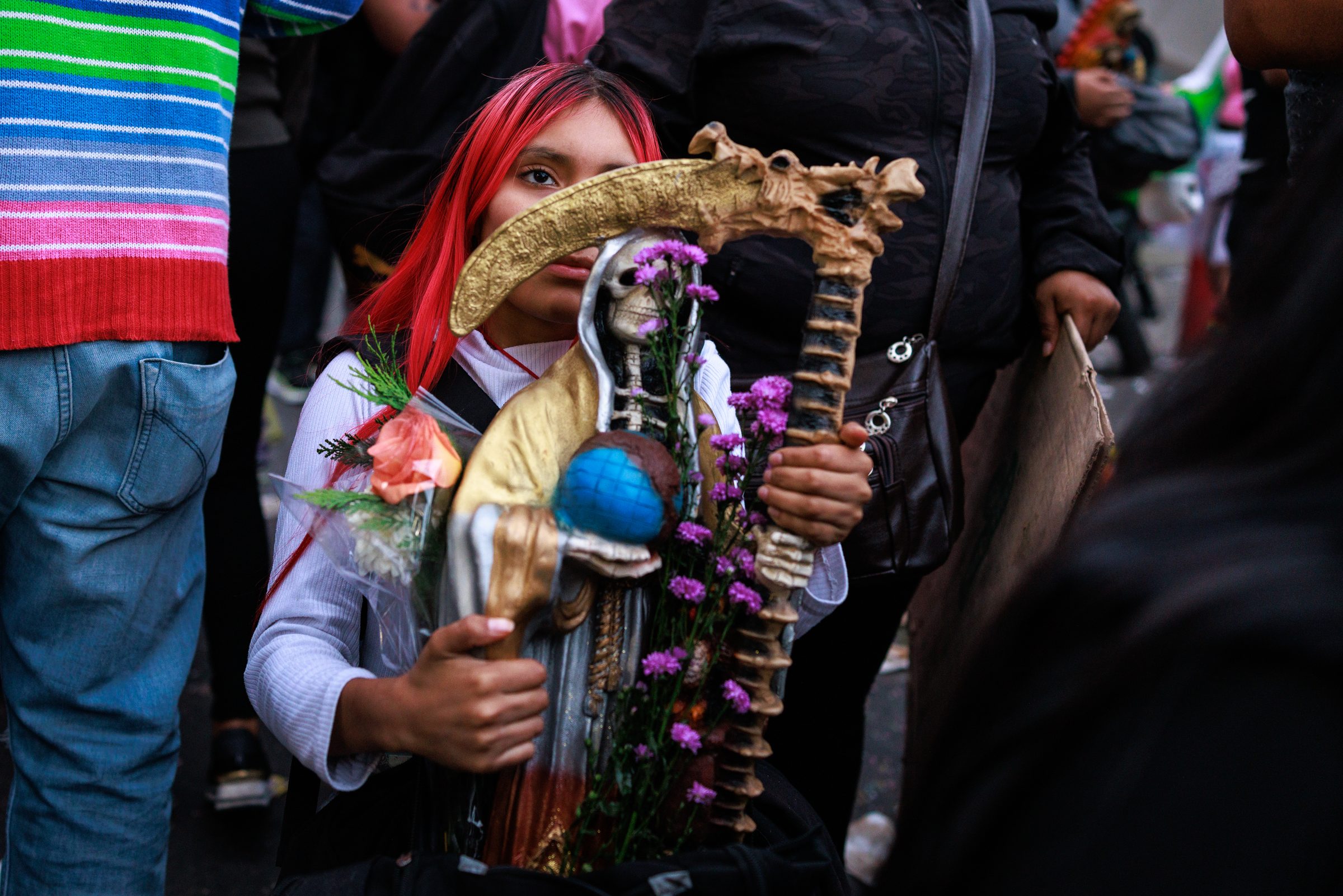
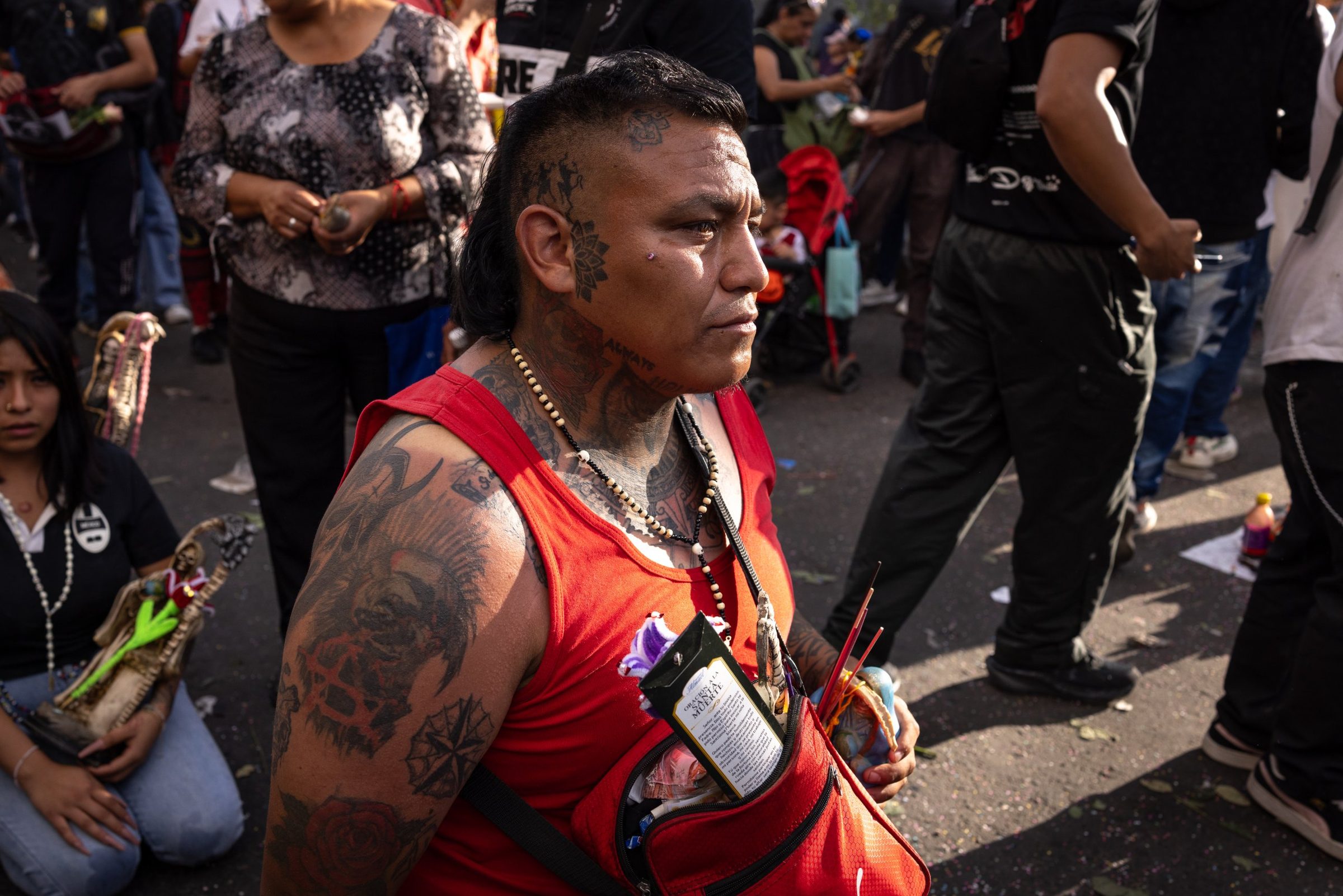
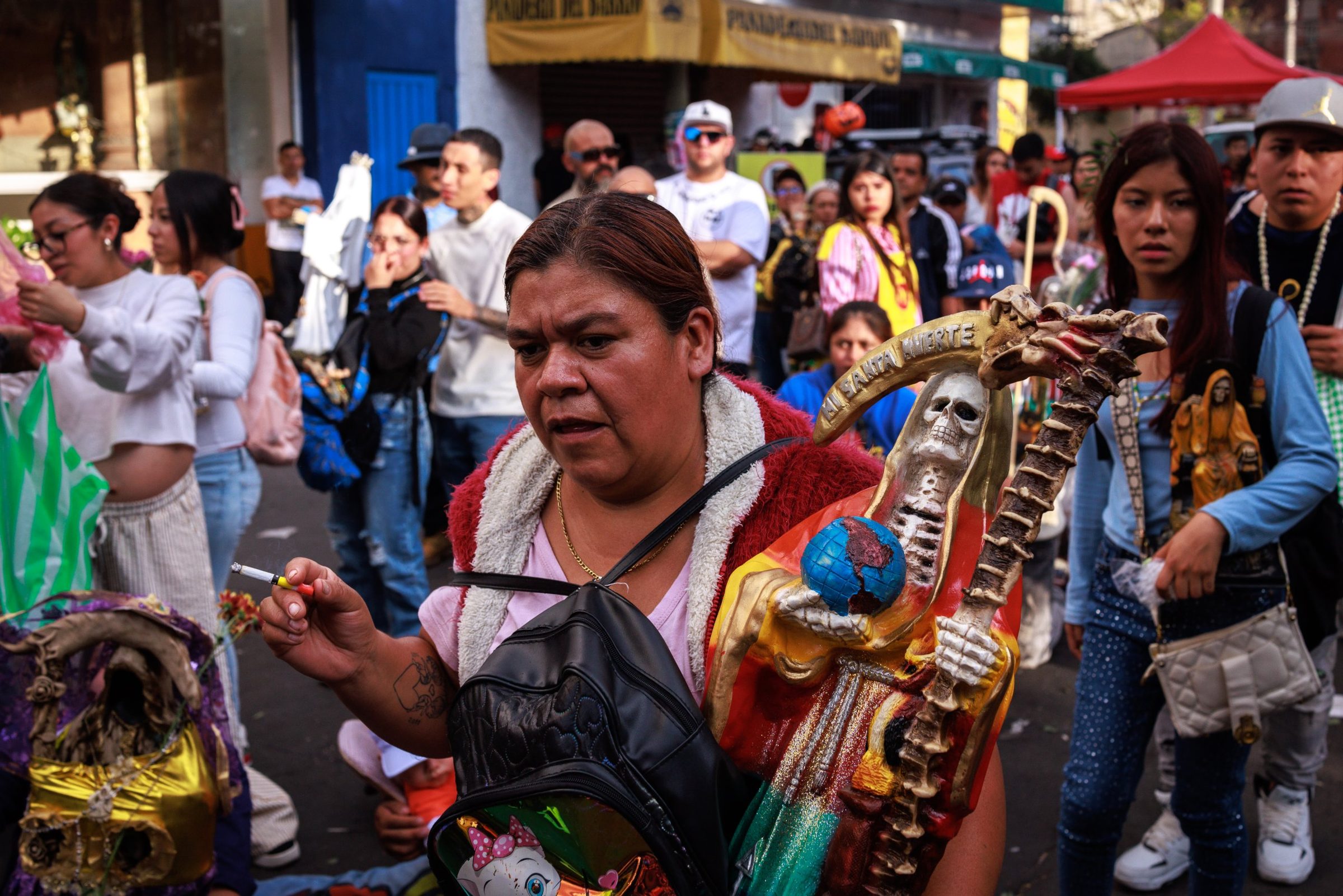
People living on the margins come to ask Santa Muerte for protection, health, work, and the safe return of loved ones, often things they feel they can't ask of God. Among them are the poor, the incarcerated and their families, sex workers, people struggling with addiction, and people involved in criminal activity.
Things they feel they can't ask of God.
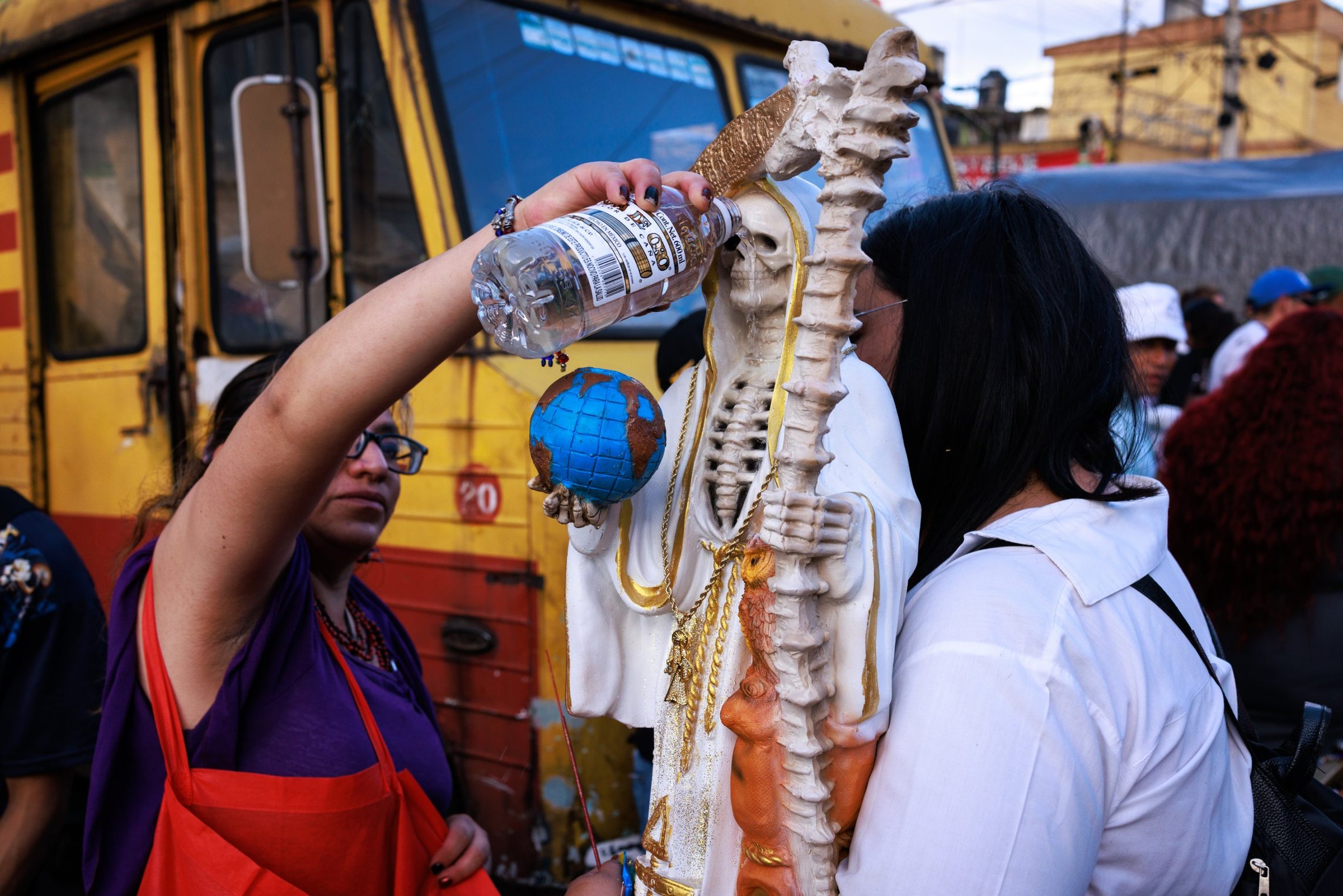
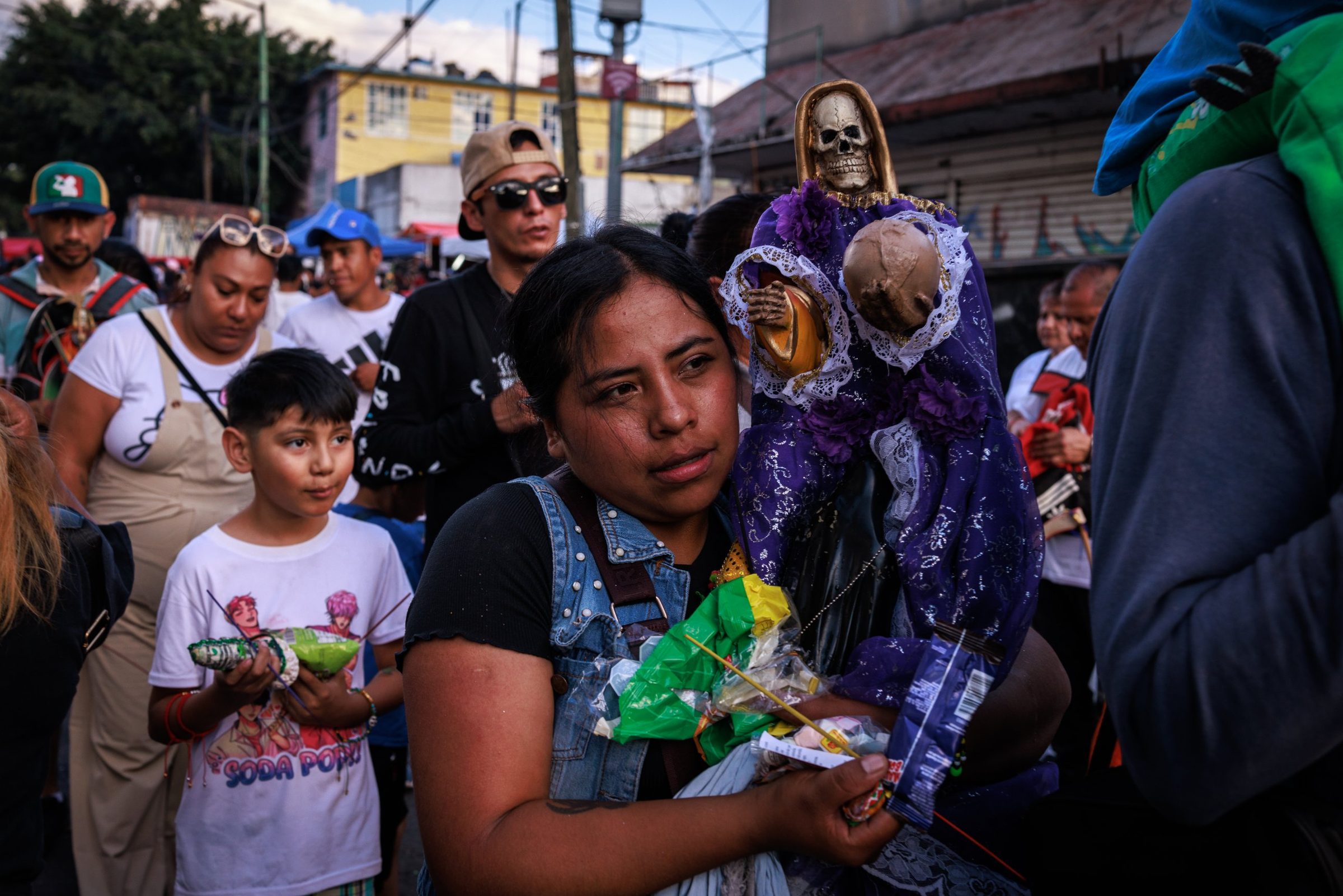
An estimated 12 million people worldwide venerate Santa Muerte, and the devotion has followed migration north. In immigrant neighborhoods like Queens, New York, Santa Muerte figurines line the shelves of botánicas. The Vatican and Mexico's Catholic bishops have condemned the devotion.
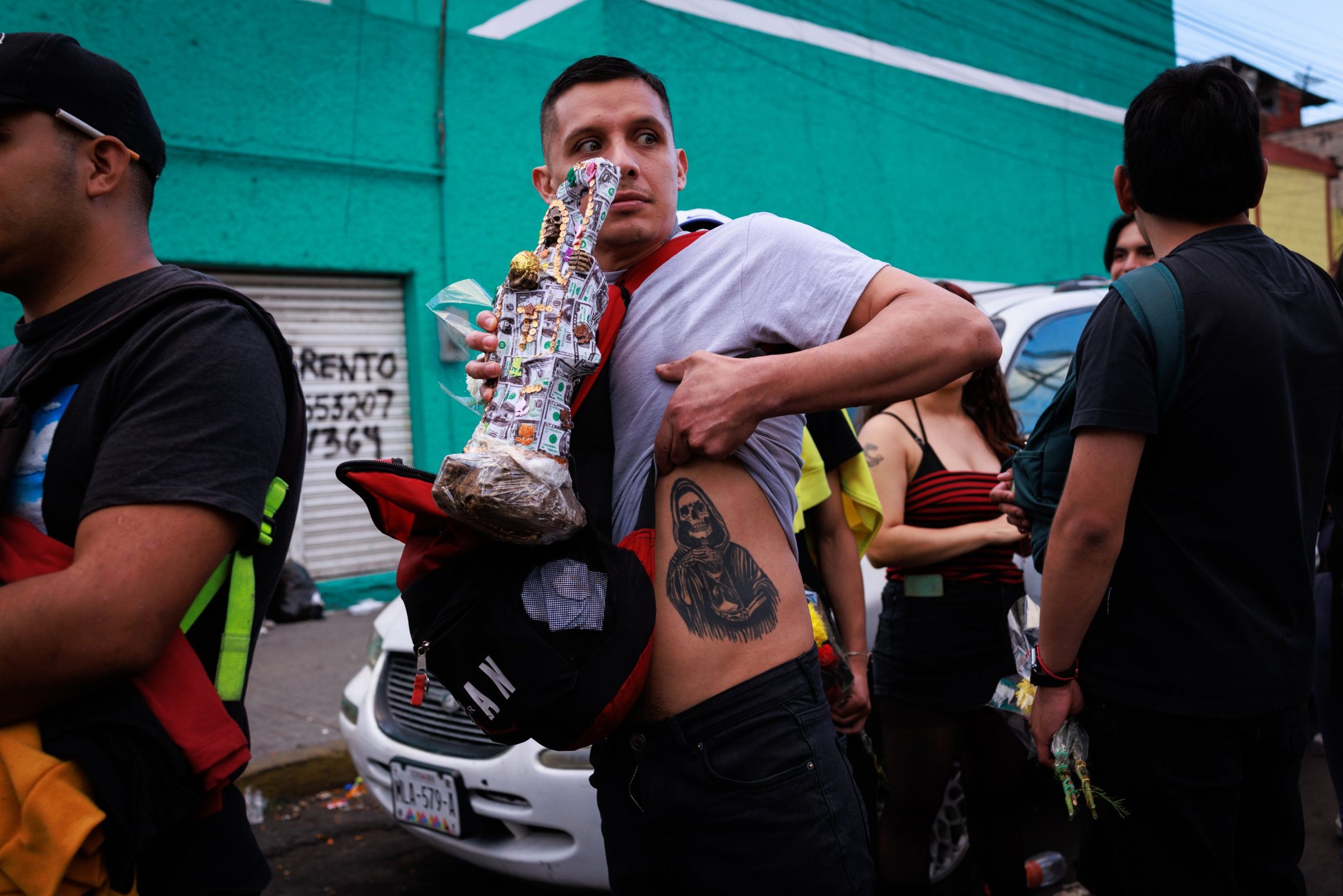
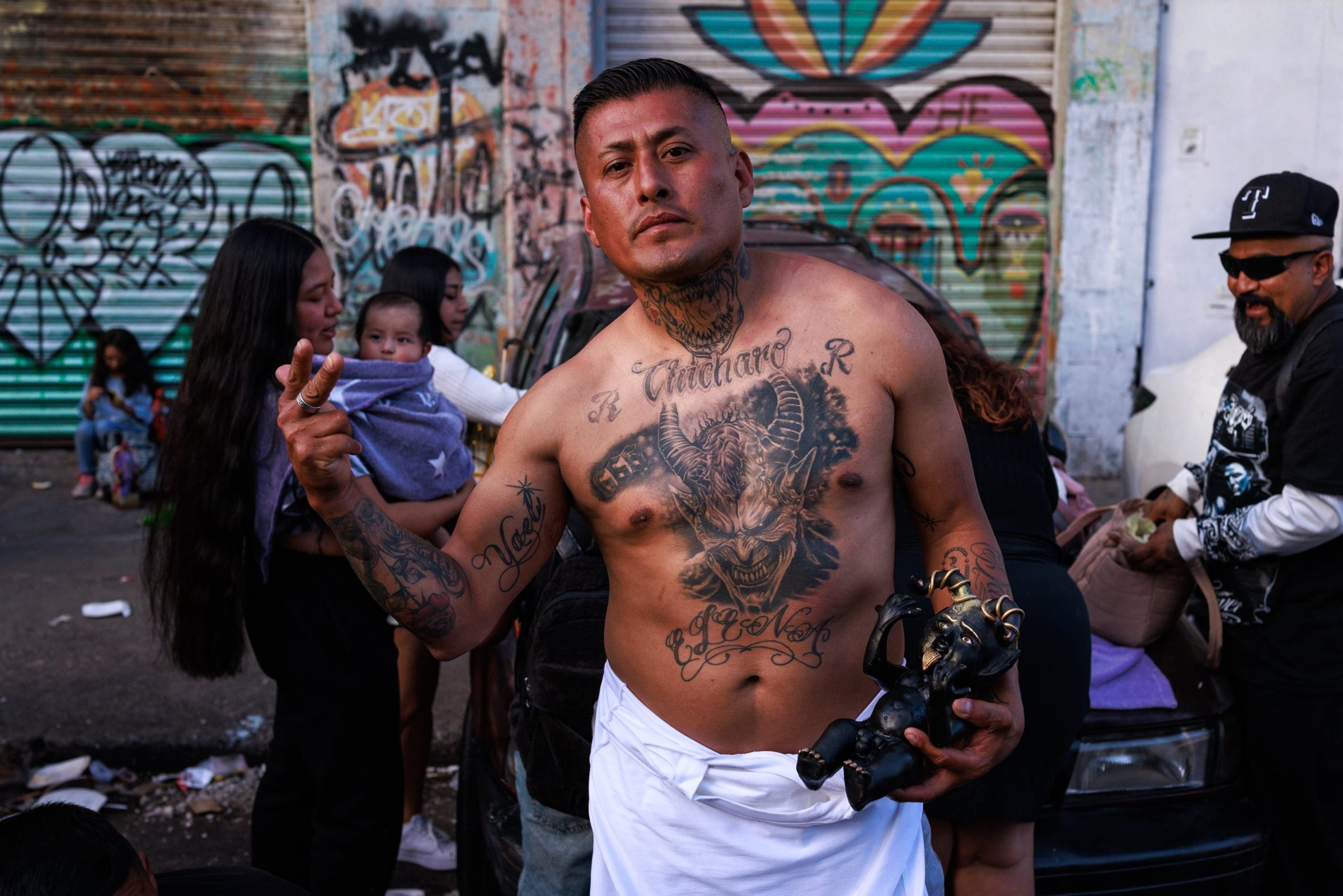
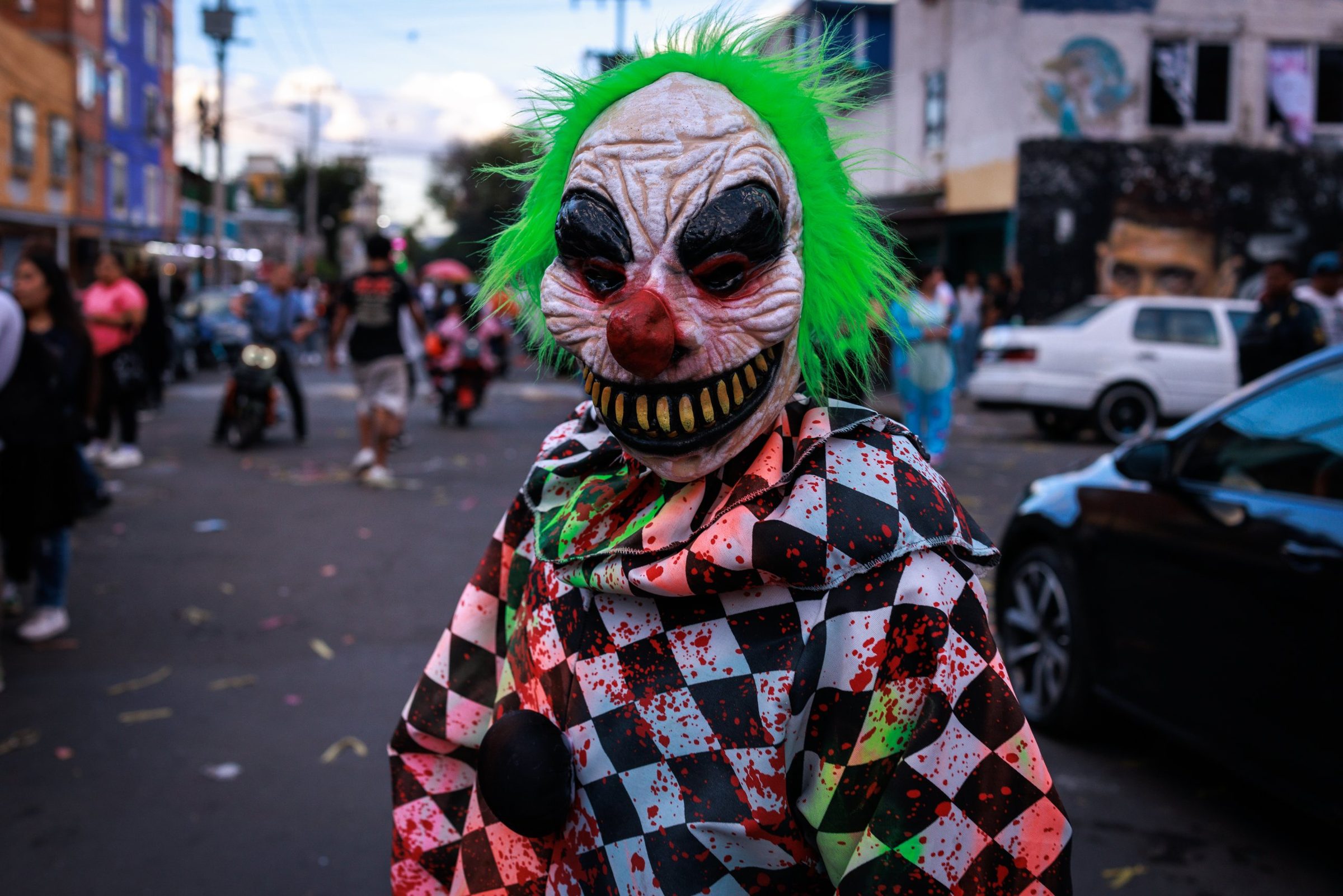
Many in Tepito take pride in the neighborhood's history of resilience and are working to show the world another side of the barrio. But the violence that surrounds them persists. That same night, just a couple of blocks away, a woman and her three-year-old son, dressed in his Day of the Dead costume, were shot and killed. Tepito remains caught in a renewed and escalating turf war between La Unión Tepito and the Anti-Unión, a rival group with reported ties to the Jalisco New Generation Cartel (CJNG).
Alexander Carrigg is an American photographer and freelance journalist documenting issues of historical significance including political unrest, conflict, and humanitarian crisis. AlexanderCarrigg.com